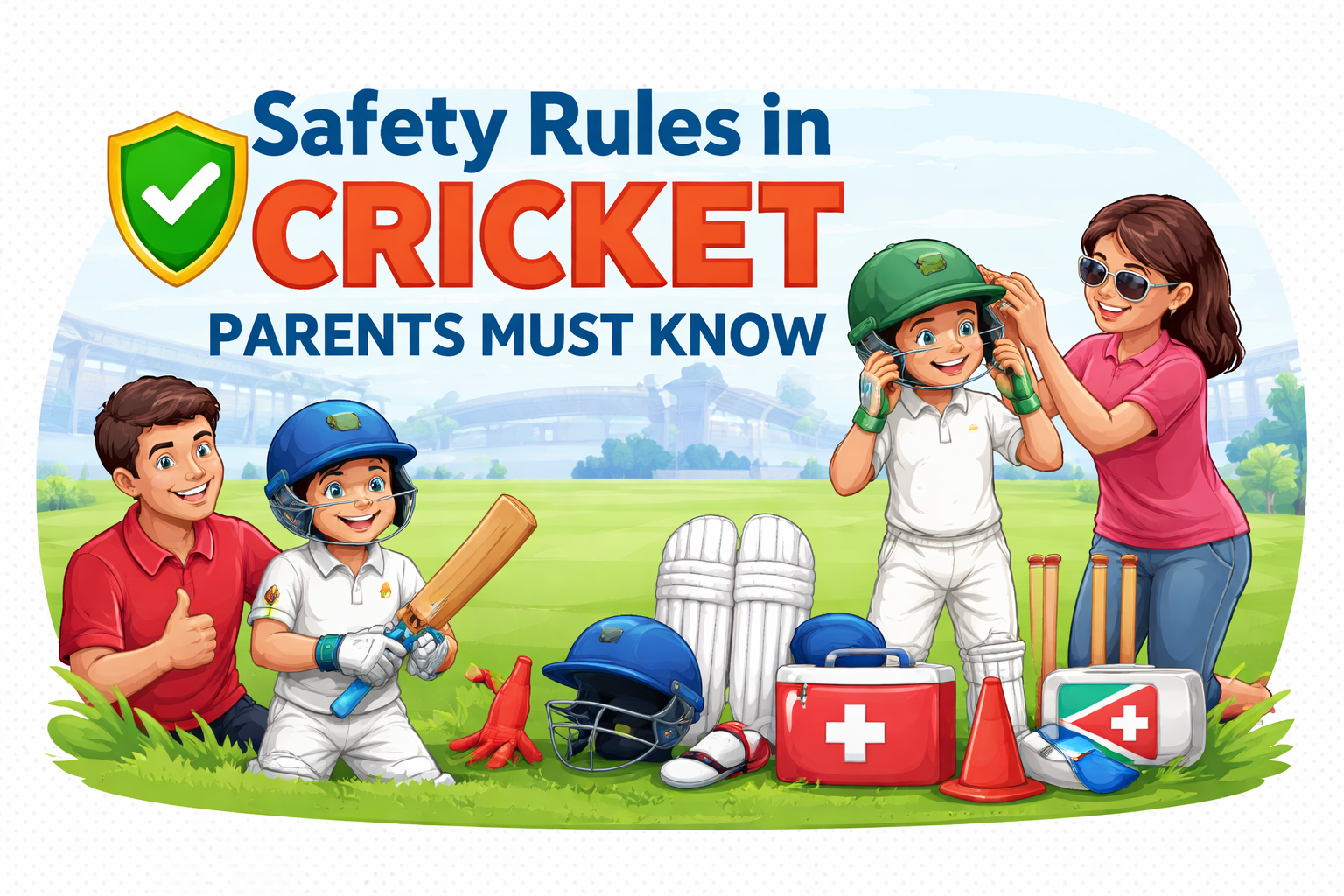
Safety Rules in Cricket Parents Must Know

Cricket is one of the most loved sports among children in India. While it builds discipline, fitness, and teamwork, safety should always come first—especially for young players. As a parent, understanding basic cricket safety rules ensures your child enjoys the game while staying protected from injuries.
In this guide, we’ll cover essential safety rules every parent must know before enrolling their child in a cricket academy.

Must-have gear:
-
Helmet with face guard
-
Batting gloves
-
Leg pads
-
Thigh guard
-
Abdominal guard
-
Chest guard (for fast bowlers)
👉 Parent Tip: Never compromise on quality. Ill-fitted or cheap gear can increase injury risk.
A trained coach ensures:
-
Correct techniques
-
Safe practice methods
-
Injury prevention
👉 Avoid letting kids play hard-ball cricket without supervision.
⚠️ 3. Start with Age-Appropriate Equipment
Not all cricket gear suits every age group.
-
Younger kids → Tennis ball or soft ball cricket
-
Beginners → Lightweight bats
-
Advanced players → Hard ball with full protection
👉 This reduces fear and prevents serious injuries.
🧠 4. Teach Basic Safety Awareness
Children must understand:
-
Never stand close behind the batsman
-
Maintain safe distance from fast bowlers
-
Always watch the ball
👉 Awareness is the first step toward injury prevention.
💪 5. Warm-Up & Cool-Down is a Must
Skipping warm-ups can lead to muscle injuries.
Include:
-
Stretching exercises
-
Light jogging
-
Mobility drills
👉 Cool-down helps reduce soreness and improves recovery.
🌡️ 6. Stay Hydrated & Avoid Heat Exhaustion
Cricket is often played under the sun.
Parents should ensure:
-
Kids drink water every 15–20 minutes
-
Avoid practice during peak heat hours
-
Use caps/sunscreen when needed
👉 Dehydration can lead to fatigue and serious health issues.
🚑 7. Immediate First Aid Knowledge
Even with precautions, minor injuries can happen.
Make sure:
-
The academy has a first aid kit
-
Coaches are trained in basic first aid
-
Ice packs are available for quick relief
👉 For serious injuries, immediate medical attention is crucial.
🧾 8. Regular Fitness & Health Checkups
Children involved in sports should:
-
Have regular health checkups
-
Maintain good physical fitness
-
Avoid overtraining
👉 Balanced training reduces injury risk and improves performance.
🚫 9. Avoid Overtraining & Pressure
Too much practice can lead to:
-
Fatigue
-
Burnout
-
Stress injuries
👉 Let kids enjoy the game instead of forcing performance.
🏟️ 10. Choose a Safe Cricket Academy
The environment matters a lot.
Look for:
-
Proper nets and turf
-
Safety protocols
-
Experienced coaches
-
Structured training programs
👉 A professional academy ensures both growth and safety.
✅ Final Thoughts
Cricket is a fantastic sport for children, but safety should never be ignored. With the right equipment, guidance, and awareness, parents can ensure their child enjoys cricket without unnecessary risks.
At The Sports Mantra – Cricket Academy, safety and performance go hand in hand—helping young cricketers grow confidently and safely.
❓ FAQs: Safety in Cricket for Kids
Q1. At what age should kids start using hard balls?
Children can start using hard balls around age 10–12 with proper protective gear and supervision.
Q2. Is helmet compulsory for kids in cricket?
Yes, helmets are essential when playing with hard balls or facing bowlers.
Q3. How can parents prevent cricket injuries?
By ensuring proper gear, warm-ups, hydration, and trained coaching.
Q4. Is cricket safe for young children?
Yes, when played under supervision with age-appropriate equipment.
Q5. How often should kids practice cricket?
3–5 sessions per week is ideal, depending on age and fitness.